






































-
Destroy this mad brute Poster
Harry Ryle Hopps · 1917 · Dramatic wartime poster featuring a helmeted gorilla advancing with club and captive
Poster from 69 kr · Framed from 122,67 kr
Regular price From 46,00 krRegular price


A Frontpage That Reads Like a Gallery Wall
MORYARTY frontpage functions less as a category and more as a changing hang: vintage poster classics, modernist studies, and graphic print ephemera sharing space like a small salon. The unity comes from how images sit on paper, how type is weighted, and how color behaves when translated into ink. For anyone building wall art slowly, it is a useful place to notice what holds attention beyond subject matter: scale, negative space, and the calm authority of a well-resolved print.
The Language of Lithography and Early Commercial Design
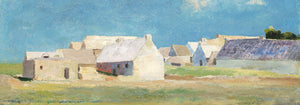
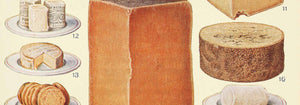
Many works that circulate as posters today were shaped by lithography and early offset printing, where image and message had to remain legible from the street. That constraint produced a particular elegance: flat color fields, granular gradients, and silhouettes that read instantly. Look closely and you can often sense the mechanical choreography of the press in slight misregistration, the bite of letterforms, or dense blacks that sit matte rather than glossy. The same design intelligence runs through vintage commercial sheets in Advertising and the more painterly reproductions grouped in Classic Art, which can share a wall without feeling mismatched.
Placing Posters Room by Room
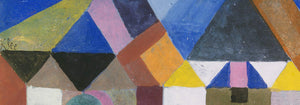
In an entryway, one larger poster with a clear contour acts like a visual threshold, especially if it echoes the undertone of nearby materials such as oak, stone, or painted trim. Living rooms tolerate more variety when you keep one constant, such as cream paper tones or a restrained palette; that is where quiet abstractions from Abstract can steady bolder graphics. Kitchens and dining corners often suit posters with strong typography because cabinetry and tile already impose a grid. For bedrooms, choose prints with more breathing room in the composition, or coastal horizons from Sea & Ocean to keep the atmosphere light while still feeling intentional as decoration.
Curating Without Noise: Pairing, Spacing, Framing
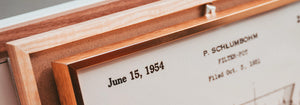
A convincing gallery wall depends on rhythm. Combine one image with detail, one typographic sheet, and one open scene to avoid a uniform density. Landscapes from Landscape can be hung slightly lower to widen a room by implication, while a high-contrast study from Black & White can act as the anchor that other colors orbit. Keep spacing consistent, and let paper tone do some of the harmonizing work. Framing choices are part of composition: a slim dark profile clarifies graphic work, natural wood softens older inks, and a generous mat reduces glare while giving busy images room to settle. For proportion and finish, Frames is a practical reference point.
A Moving Edit with a Historical Thread
The pleasure of a frontpage selection is that it changes with taste: one week leaning toward signage and bright inks, another toward quieter studies. That movement is a reminder that posters have always lived between art and public life, designed to travel, persuade, and linger in memory. When you want a snapshot of what resonates widely, Bestsellers offers a parallel view. Taken together, these prints read as small documents of style, each one bringing a specific moment of visual culture into contemporary home decor.