


You may also like
-
Mount Fuji as Seen from Kashiwabara Poster
Kazumasa Ogawa · 1897 · Hand colored Mount Fuji vintage print with calm boats and a quiet horizon
Poster from 69 kr · Framed from 122,67 kr
Regular price From 46,00 krRegular price -
Group of Azaleas Poster
Kazumasa Ogawa · 1896 · Delicate botanical print of clustered azaleas with soft pink blossoms and fresh green leaves
Poster from 69 kr · Framed from 122,67 kr
Regular price From 46,00 krRegular price -
Cherry Blossom Poster
Kazumasa Ogawa · 1892 · Delicate cherry blossom vintage print with hand-tinted petals and tranquil spring atmosphere
Poster from 69 kr · Framed from 122,67 kr
Regular price From 46,00 krRegular price -
Lily Poster
Kazumasa Ogawa · 1896 · Delicate lily botanical print with hand-tinted petals and soft neutral background
Poster from 69 kr · Framed from 122,67 kr
Regular price From 46,00 krRegular price


-

"Very nice Posters. The quality is amazing and we received it very quickly !"
-

"A shop to visit absolutely. Huge selection of posters. We spent more than an hour there !"
-

"Perfect to find gift. Price are very good. An they can frame and pack it on site"
About the Artist
Kazumasa Ogawa was a pioneering Japanese photographer and printer active during the Meiji period, a transformative era when Japan was opening to the world and embracing new technologies. Renowned for his mastery of collotype printing and delicate hand-coloring, Ogawa helped bridge traditional Japanese aesthetics with the emerging art of photography.
His work, including this vintage photograph, contributed to how Japan was perceived both domestically and abroad, as albums and souvenir views became popular among travelers and collectors. For more from this era, see our vintage photography prints and Oriental art prints.
The Artwork
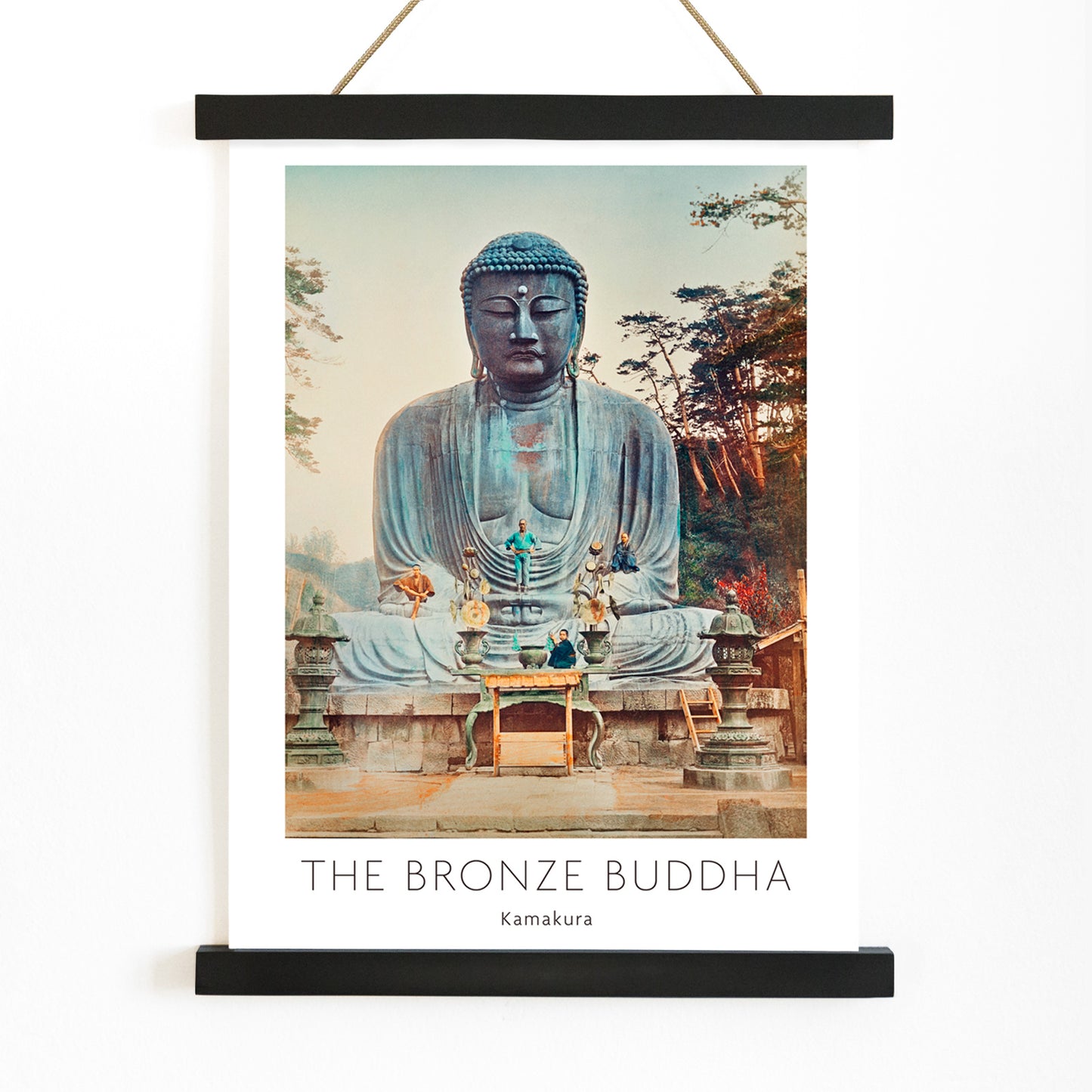
This image captures the Great Buddha of Kamakura, known as the Daibutsu, a revered symbol of Buddhist devotion and resilience. Originally cast in the 13th century, the statue became a powerful emblem of endurance, especially after natural disasters changed its temple setting. By the late 19th century, the Daibutsu was not only a spiritual site but also a destination for students, pilgrims, and foreign visitors, with photographs like this serving as treasured mementos and cultural introductions.
Ogawa’s photograph reflects this dual role, offering both a sense of spiritual gravity and a glimpse into Japan’s evolving identity at a time of great change.
Style & Characteristics
The composition presents the monumental seated Buddha in a direct, frontal view, emphasizing its scale and tranquil presence. Hand-applied color softens the photographic detail, creating a gentle, contemplative mood rather than a stark documentary effect.
Muted greens and browns evoke the bronze statue and lush foliage, while the pale sky introduces a serene openness. The overall effect is a timeless Japanese photo art print, balancing realism with an air of quiet reverence. For similar palettes, explore our blue tone wall art selections.
In Interior Design
This poster brings a sense of calm and focus to living rooms, entryways, or meditation spaces. Its balanced composition works well above a console or as an anchor in a gallery wall, especially when paired with travel-inspired or classic imagery.
Combine it with natural woods, linen, and soft stone hues for a harmonious look that nods to its historical roots without feeling themed. The artwork complements Japandi, minimalist, and curated eclectic interiors, and is elevated further with quality mats and our frames collection.