


You may also like
-
Cactus Opuntia Poster
Pierre-Joseph Redouté · 1816 · Elegant prickly pear cactus print with luminous yellow flower and crisp botanical detail
Poster from 69 kr · Framed from 122,67 kr
Regular price From 46,00 krRegular price -
Pineapple Poster
Pierre-Joseph Redouté · 1805 · Refined pineapple print with crisp botanical detail and soft green-yellow tones
Poster from 69 kr · Framed from 122,67 kr
Regular price From 46,00 krRegular price -
Scarlet banana Poster
Pierre-Joseph Redouté · 1805 · Elegant scarlet banana botanical print with crisp green leaves and vivid red bloom
Poster from 69 kr · Framed from 122,67 kr
Regular price From 46,00 krRegular price -
Bird of paradise Poster
Pierre-Joseph Redouté · 1805 · Elegant bird of paradise print with white blossoms and slender green leaves
Poster from 69 kr · Framed from 122,67 kr
Regular price From 46,00 krRegular price


-

"Very nice Posters. The quality is amazing and we received it very quickly !"
-

"A shop to visit absolutely. Huge selection of posters. We spent more than an hour there !"
-

"Perfect to find gift. Price are very good. An they can frame and pack it on site"
About the Artist
Pierre-Joseph Redouté, born in the Southern Netherlands and active in France, was renowned as the leading botanical illustrator of his generation. He worked for prominent patrons, including Empress Joséphine, and contributed significantly to the documentation of plant species during a period of intense botanical exploration in the late eighteenth and early nineteenth centuries.
Redouté's meticulous approach and refined watercolor technique set new standards for botanical art, blending scientific accuracy with an artistic sensibility that continues to inspire collectors and artists alike.
The Artwork
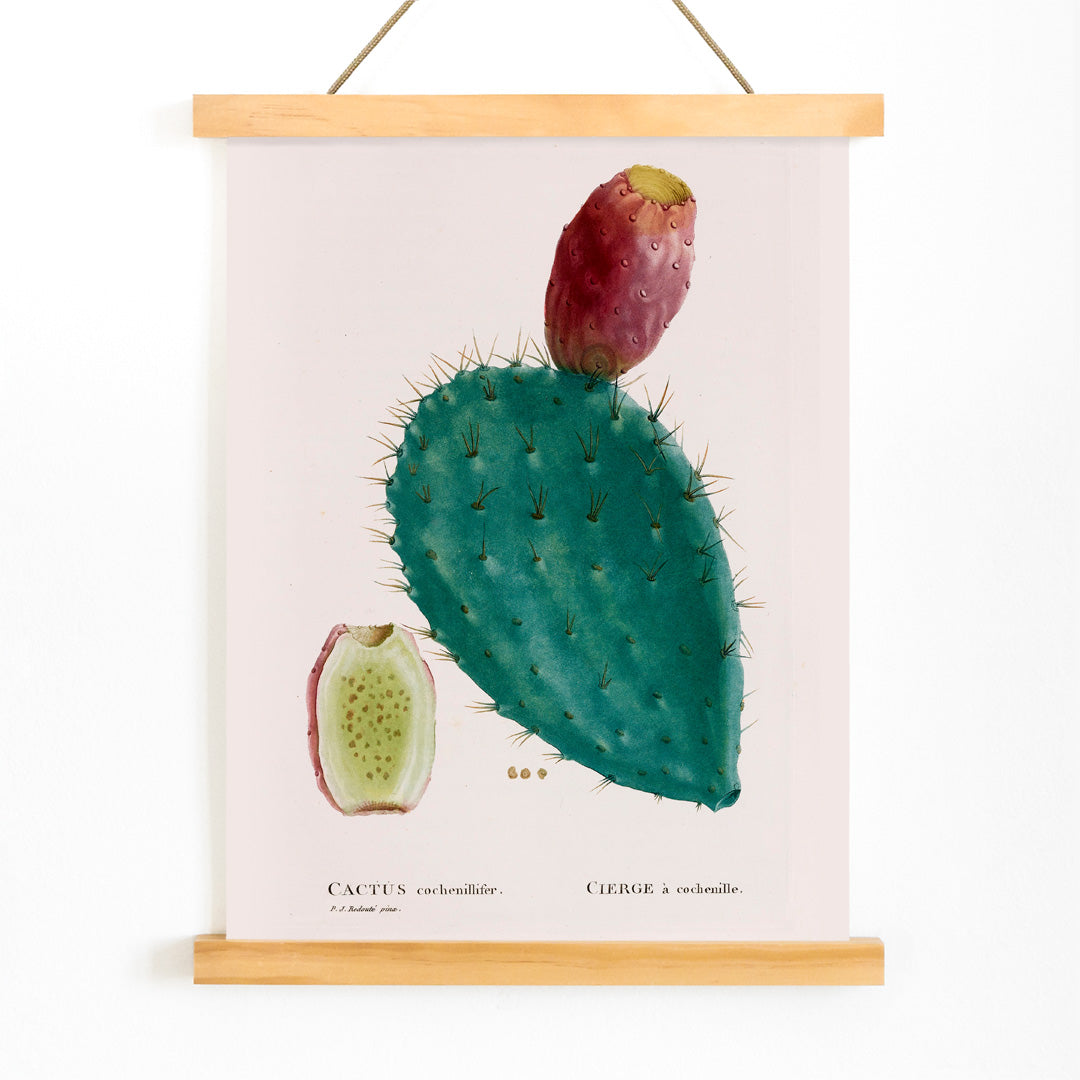
Created in 1828, this illustration of Cactus cochenillifer captures the European fascination with exotic plants from the Americas during the age of botanical discovery. The prickly pear cactus, shown here, was valued not only for its striking appearance but also for its association with the cochineal insect, a vital source of red dye in the textile industry.
Botanical plates like this served as essential references for horticulturists and scientists, aiding in the identification and study of new species. Today, this vintage print stands as a testament to the era's spirit of exploration and the enduring appeal of botanical illustration.
Style & Characteristics
The artwork features a single prickly pear cactus rendered against a pale, uncluttered background, emphasizing the plant's segmented pads, delicate spines, and subtle blossoms. Redouté's use of transparent watercolor washes and fine contour lines imparts a sense of realism and delicacy.
Shades of green dominate the cactus pads, complemented by gentle pinks in the flowers and touches of yellow in the fruit. The overall effect is calm and archival, appealing to admirers of botanical prints and those seeking a vintage piece with a serene, timeless quality. For a harmonious display, it pairs beautifully with green toned posters or scientific wall art.
In Interior Design
This botanical print lends a fresh, natural accent to kitchens, dining rooms, hallways, or home offices, where its airy composition brings a sense of calm without overwhelming the space. Its precise rendering and soft palette suit both contemporary and classic interiors, including Scandinavian and Japandi styles.
Pair with natural wood, warm whites, or muted terracotta for a cohesive look, or echo the pink and green tones with complementary textiles and ceramics. For a curated gallery wall, combine with other botanical or scientific prints to evoke the spirit of a collector's study.