


You may also like
-
Attalea Compta Poster
Carl Friedrich Philipp von Martius · 1823 · Detailed botanical print of Attalea palm with coastal scene and botanical studies
Poster from 69 kr · Framed from 122,67 kr
Regular price From 46,00 krRegular price -
Astrocaryum Vulgare Poster
Carl Friedrich Philipp von Martius · 1823 · Detailed palm botanical print with specimen studies on warm beige paper
Poster from 69 kr · Framed from 122,67 kr
Regular price From 46,00 krRegular price -
Maximiliana Regia Poster
Carl Friedrich Philipp von Martius · 1823 · Tropical palm botanical print featuring graceful fronds and detailed scientific illustration
Poster from 69 kr · Framed from 122,67 kr
Regular price From 46,00 krRegular price -
Cocos Schizophylla Poster
Carl Friedrich Philipp von Martius · 1823 · Detailed botanical print of a palm specimen with fronds and fruit
Poster from 69 kr · Framed from 122,67 kr
Regular price From 46,00 krRegular price


-

"Very nice Posters. The quality is amazing and we received it very quickly !"
-

"A shop to visit absolutely. Huge selection of posters. We spent more than an hour there !"
-

"Perfect to find gift. Price are very good. An they can frame and pack it on site"
About the Artist
Carl Friedrich Philipp von Martius was a German botanist and explorer whose early 19th-century research transformed the study of tropical plants in Europe. After extensive fieldwork in Brazil, Martius became renowned for translating his discoveries into influential botanical publications that set new standards for scientific illustration. His legacy endures in the world of scientific wall art and natural history, where his work bridges exploration and academic rigor.
Martius’s palm studies were instrumental in refining botanical classification at a time when European collections were rapidly expanding with new species from abroad.
The Artwork
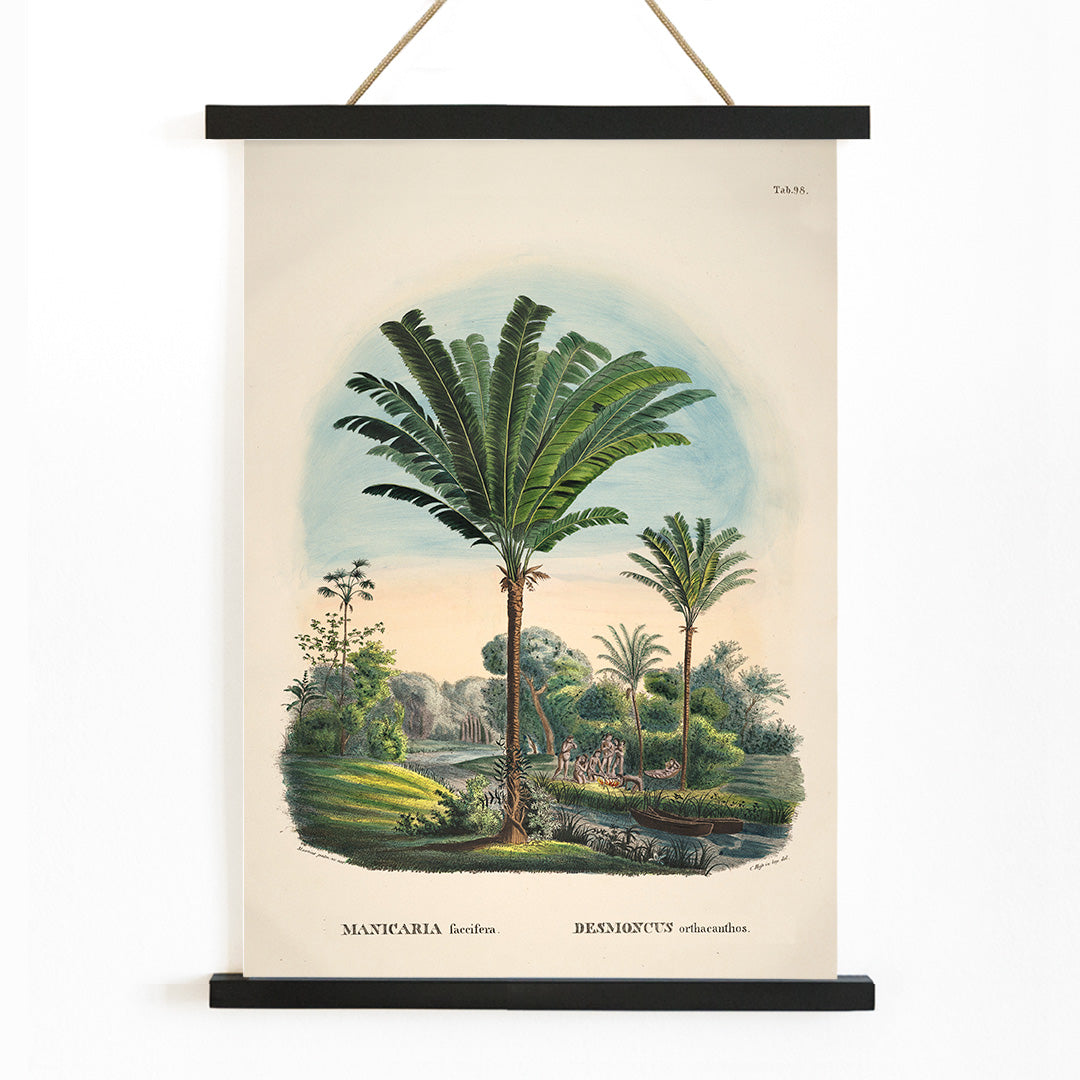
This illustration of Desmoncus orthacanthos reflects the 19th-century drive to document and classify the natural world. Created as part of a comprehensive botanical survey, the plate served as a scientific reference—enabling botanists and scholars to study the unique features of Amazonian palms without direct access to living specimens. Its purpose was to provide a reliable visual record for research, teaching, and the exchange of knowledge across institutions.
Today, the print stands as a testament to the era’s spirit of discovery and the meticulous effort to catalog nature for future generations.
Style & Characteristics
The artwork is composed as a precise botanical study, with the palm’s main stem and fronds centrally displayed and smaller anatomical details arranged alongside for clarity. Fine, controlled linework outlines the plant’s structure, while gentle hand-applied washes of green bring the foliage to life. Subtle hints of blue and the warm beige of the aged paper add depth and a sense of history to the image.
The overall effect is calm and contemplative, making it a fitting example of botanical wall art that values both scientific accuracy and visual harmony.
In Interior Design
This palm botanical print lends a refined, natural touch to living rooms, hallways, or home offices where understated detail is desired. It pairs seamlessly with interiors featuring rattan, oak, linen, or matte ceramics, and also enhances classic-art spaces that emphasize symmetry and muted tones.
For a cohesive gallery wall, coordinate with green plants and textiles, and let the beige and blue tones inspire complementary accents. It is an elegant choice for those seeking vintage wall art with a scholarly, tranquil atmosphere.