


You may also like
-

Purple Emperor Butterfly Poster
Oliver Goldsmith · 1820 · Detailed butterfly print featuring the Purple Emperor and companion species in classic entomological style
Poster from 69 kr · Framed from 122,67 kr
-

Two parakeets Poster
Oliver Goldsmith · 1774 · Two parakeets vintage print with vivid green plumage and delicate natural history detail
Poster from 69 kr · Framed from 122,67 kr
-

Earth and animated nature Poster
Oliver Goldsmith · 1820 · Illustrated wildlife poster featuring a central globe surrounded by animals and birds
Poster from 69 kr · Framed from 122,67 kr
-

Earth and animated nature Poster
Oliver Goldsmith · 1820 · Detailed animal vintage print arranged as a natural history plate in crisp monochrome
Poster from 69 kr · Framed from 122,67 kr


-

"Very nice Posters. The quality is amazing and we received it very quickly !"
-

"A shop to visit absolutely. Huge selection of posters. We spent more than an hour there !"
-

"Perfect to find gift. Price are very good. An they can frame and pack it on site"
About the Artist
Oliver Goldsmith was active during the early nineteenth century, a period marked by a flourishing interest in natural history and the publication of illustrated reference books. His work contributed to the popularization of zoological knowledge, making exotic and native species accessible to a broader public. Goldsmith’s illustrations bridged the gap between scientific study and decorative art, reflecting the era’s fascination with cataloging the natural world.
His bird plates, such as this one, were created for collectors, scholars, and enthusiasts who valued both scientific accuracy and visual appeal. Today, Goldsmith’s legacy endures among admirers of scientific illustration prints and those drawn to the refined charm of classic decorative art.
The Artwork
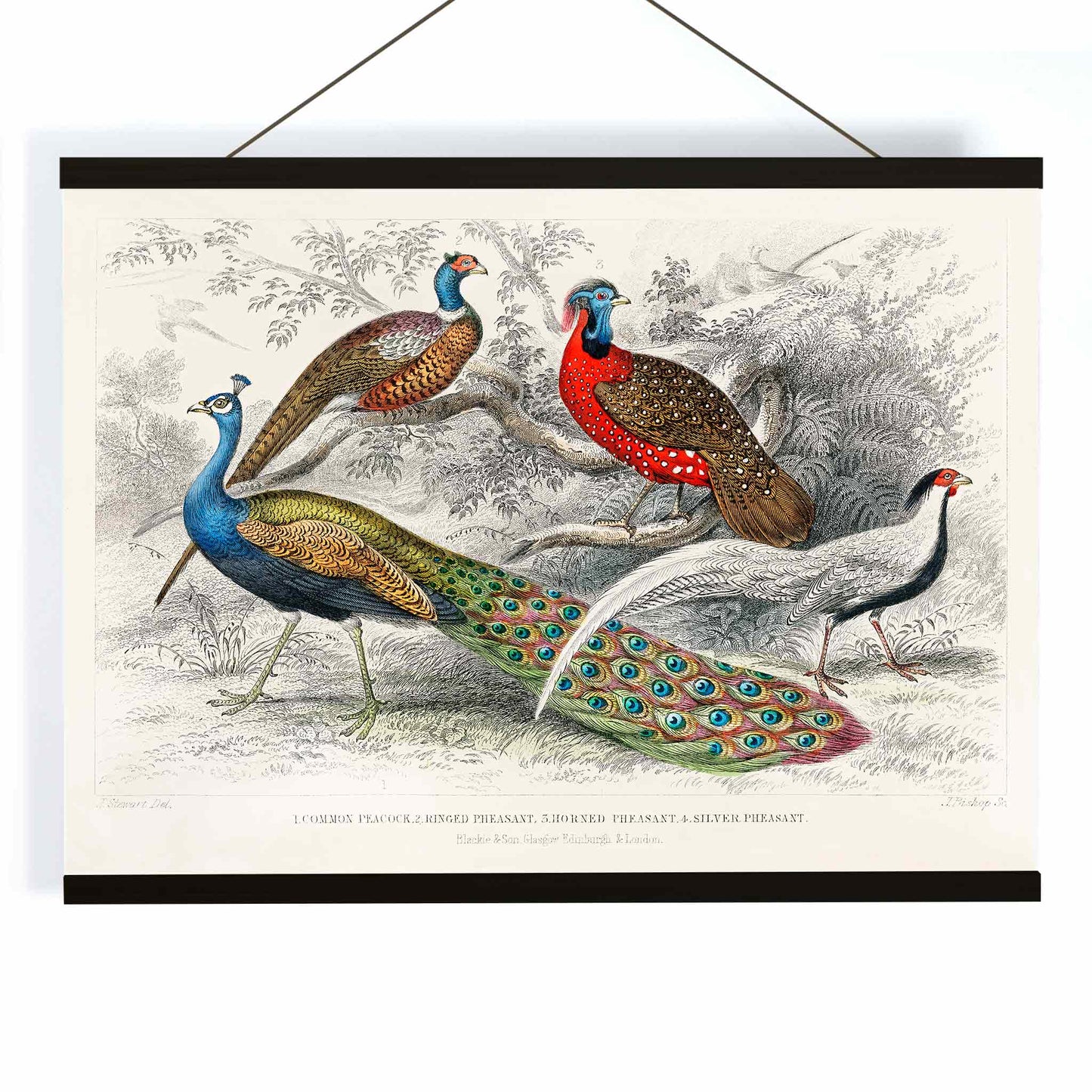
This plate, Peacock and Pheasants, was produced at a time when European society was captivated by the diversity and beauty of bird species. The artwork served as a reference tool, allowing viewers to compare the distinctive features of each bird, from the familiar peacock to the more unusual pheasants that were being introduced through global trade and private collections.
Beyond its scientific purpose, the inclusion of these birds also reflected social aspirations—peacocks and pheasants were symbols of prestige and the expanding reach of the era’s naturalists. The print remains a notable example within the tradition of vintage animal illustration, as seen in our animal wall art collection.
Style & Characteristics
The composition arranges the peacock and pheasants in a balanced, display-like manner, emphasizing their unique postures and plumage. The peacock’s iridescent blues and greens dominate the scene, while the pheasants introduce warm browns, reds, and subtle whites. Fine linework and delicate hand-coloring highlight feather textures and naturalistic shading, lending the print a luminous and poised atmosphere.
The technique combines scientific precision with an understated elegance, resulting in a print that feels both educational and visually striking. The overall mood is one of quiet sophistication, characteristic of nineteenth-century natural history illustration.
In Interior Design
This vintage bird print is well suited to living rooms, studies, or dining areas where its detail can be appreciated. It complements traditional, English cottage, and modern classic interiors, especially those that blend antiques with contemporary elements.
For harmonious styling, pair the artwork with deep greens, muted blues, walnut woods, and soft whites, or echo one of its accent tones in textiles and accessories. A simple mat and a refined frame will enhance its timeless appeal without overwhelming the composition.