


You may also like
-

Assorted cacti Poster
Unknown artist · 1899 · Lively cactus botanical print with multiple forms and bright blossoms on clean paper
Poster from 69 kr · Framed from 122,67 kr
-

Beehive cactus Poster
Unknown artist · 1899 · Detailed beehive cactus botanical print with soft green tones and delicate red flowers
Poster from 69 kr · Framed from 122,67 kr
-

Rattail Cactus Poster
Unknown artist · 1899 · Elegant rattail cactus print with trailing green stems and red pink blossoms
Poster from 69 kr · Framed from 122,67 kr
-

German empress cactus Poster
Unknown artist · 1899 · Delicate pink flowering cactus print with crisp botanical detail on warm beige ground
Poster from 69 kr · Framed from 122,67 kr


-

"Very nice Posters. The quality is amazing and we received it very quickly !"
-

"A shop to visit absolutely. Huge selection of posters. We spent more than an hour there !"
-

"Perfect to find gift. Price are very good. An they can frame and pack it on site"
About the Artist
By an unknown artist, this 1899 botanical plate exemplifies the late nineteenth-century fascination with cataloguing the natural world. During this period, botanical illustrations were essential tools for scientists, educators, and plant enthusiasts, serving both as scientific documentation and as objects of beauty. Such works bridged the gap between academic study and the growing public interest in exotic and familiar plant species alike.
This plate reflects a time when advances in printing made detailed color images widely accessible, allowing people to explore the diversity of plant life from their own homes. The enduring appeal of these illustrations lies in their blend of accuracy and artistry, making them prized by collectors and admirers of vintage botanical art.
The Artwork
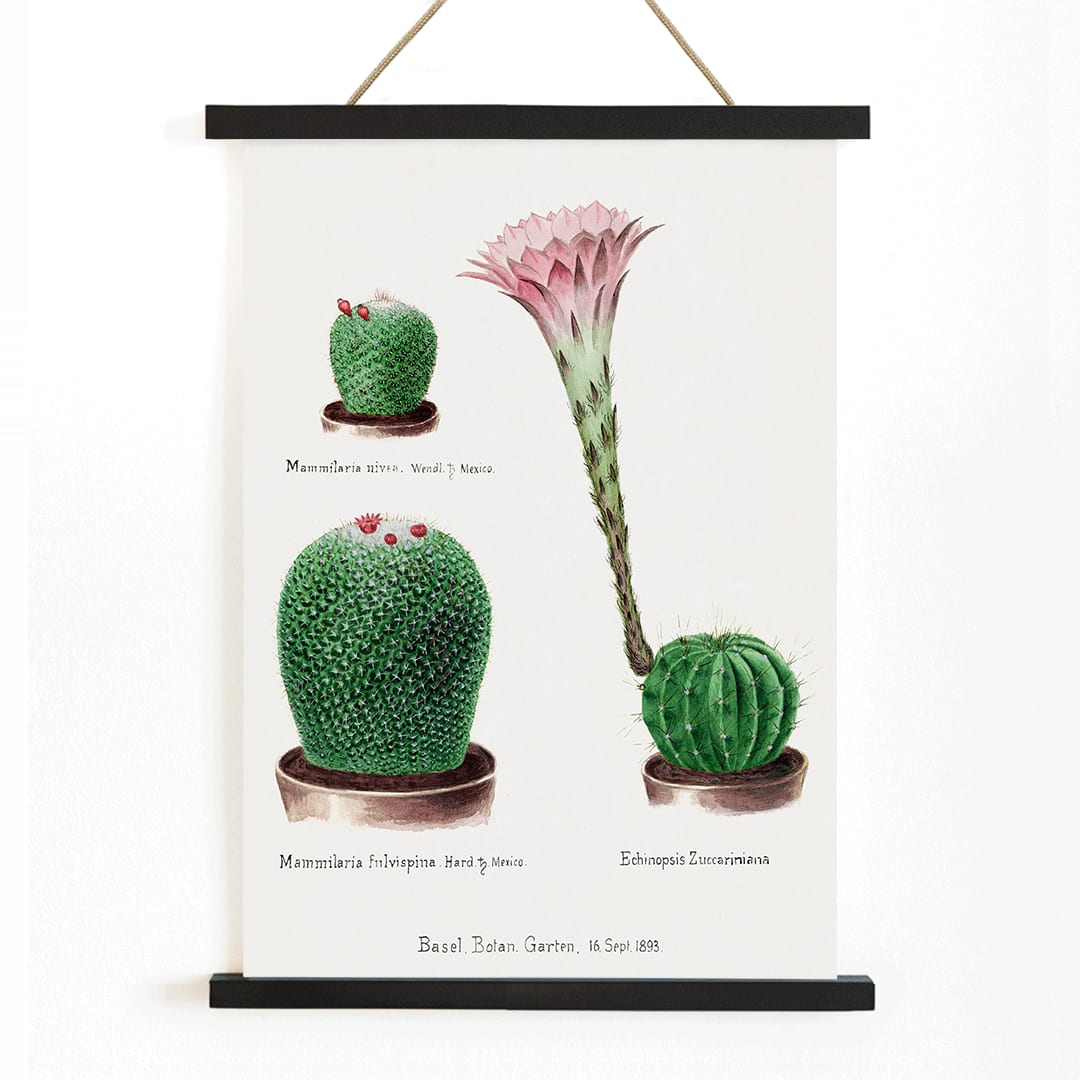
This illustration brings together the Rainbow Pincushion cactus and the Easter lily, highlighting the contrast between the arid resilience of cacti and the cultivated grace of lilies. In the context of its creation, such pairings encouraged viewers to appreciate botanical diversity and to compare the adaptations and forms of different species. The artwork likely served as an educational reference, fostering curiosity about plant life and supporting the study of botany at a time when interest in horticulture and natural science was flourishing.
By presenting both a desert plant and a garden favorite, the plate reflects the era's enthusiasm for collecting and understanding plants from varied environments, whether for scientific, decorative, or symbolic reasons.
Style & Characteristics
The composition is arranged as a classic specimen study, with each plant isolated for clarity and emphasis. The cactus is depicted with its rounded form, dense spines, and subtle pink and yellow blooms, while the lily is shown with tall, slender stems and open, trumpet-shaped white flowers. This juxtaposition creates a dynamic visual rhythm between compact and elongated shapes.
The palette features natural greens, earthy browns, and soft whites, accented by gentle pinks and yellows. The rendering is precise yet gentle, capturing botanical detail without harshness. The overall mood is calm and contemplative, characteristic of vintage scientific prints designed for both study and display.
In Interior Design
This vintage botanical print brings a touch of refined nature to living rooms, studies, or bedrooms, especially when paired with light woods and neutral textiles. Its serene presence suits both minimalist and traditional interiors, adding interest without overwhelming the space.
For a cohesive look, combine it with other botanical wall art or display alongside scientific illustration prints for a scholarly atmosphere. The print also pairs beautifully with green-toned wall decor, enhancing a natural palette and inviting a sense of tranquility.