


You may also like
-
Peaches Poster
Min Zhen · 1788 · Elegant peaches art print in spare black ink with airy negative space
Poster from 69 kr · Framed from 122,67 kr
Regular price From 46,00 krRegular price -
Koi Poster
Ohara Koson · 1926 · Serene koi poster featuring a drifting carp and tranquil blue water
Poster from 69 kr · Framed from 122,67 kr
Regular price From 46,00 krRegular price -
Boats at sunset Poster
Ohara Matao · 1927 · Serene boats poster with red sun sinking over blue water in dusk haze
Poster from 69 kr · Framed from 122,67 kr
Regular price From 46,00 krRegular price -
Persimmons and White-Eyes Poster
Kobayashi Kiyochika · 1880 · Poetic bird-and-fruit print with white-eyes perched among ripe persimmons
Poster from 69 kr · Framed from 122,67 kr
Regular price From 46,00 krRegular price


-

"Very nice Posters. The quality is amazing and we received it very quickly !"
-

"A shop to visit absolutely. Huge selection of posters. We spent more than an hour there !"
-

"Perfect to find gift. Price are very good. An they can frame and pack it on site"
About the Artist
Tsuchida Bakusen (1887–1936) was a Kyoto-based painter and a key figure in the Nihonga movement, which revitalized traditional Japanese painting by blending classical techniques with modern sensibilities. During the Taisho period, Bakusen and his contemporaries explored new subjects and approaches, balancing respect for heritage with a spirit of innovation. His work reflects a thoughtful engagement with both the changing world around him and the enduring beauty of everyday life.
Collectors interested in Japanese modern art and refined still life compositions will find Bakusen’s approach especially compelling. For more works in this vein, browse our oriental art prints collection.
The Artwork
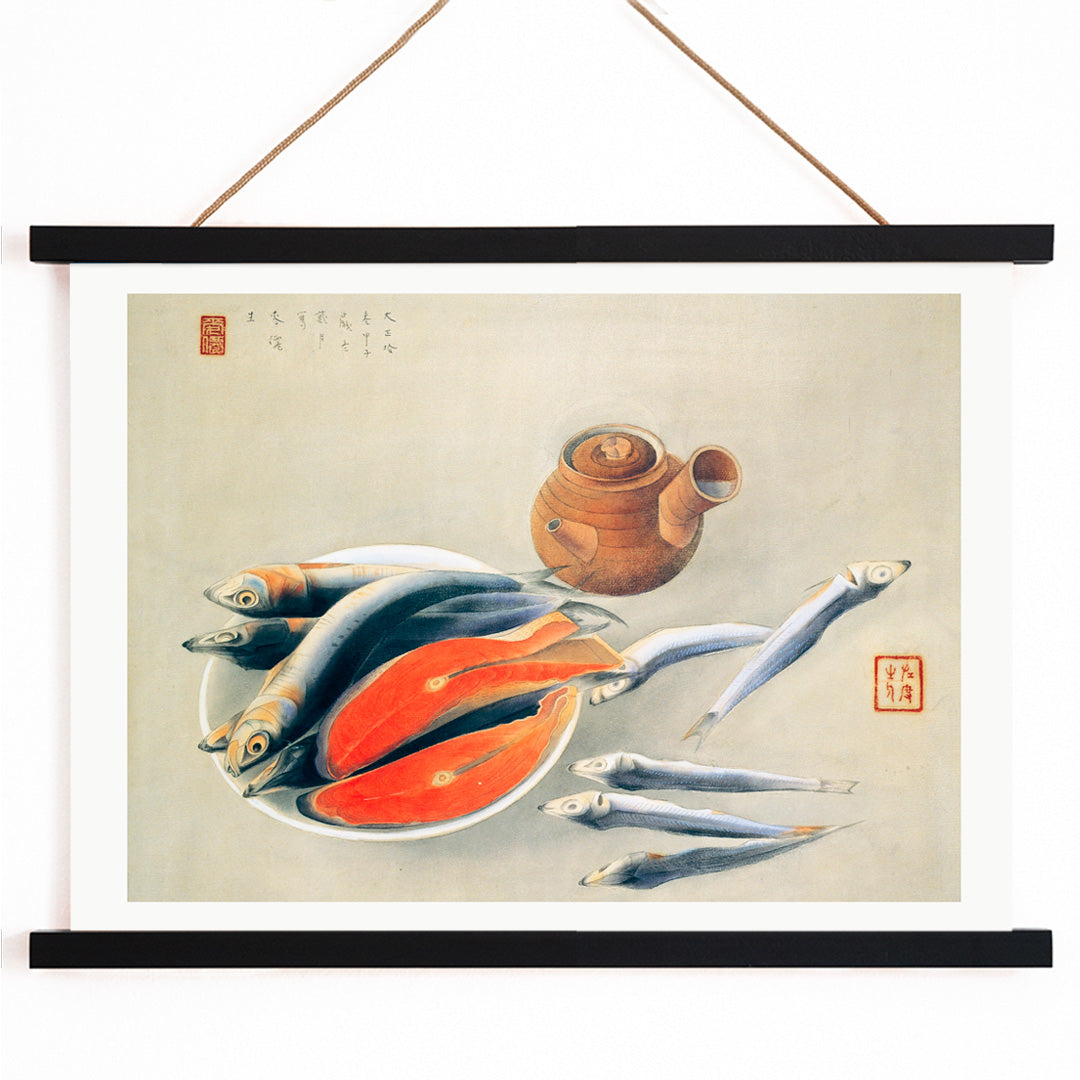
Created in 1924, Salmon Slices and Sardines captures a quiet moment from daily life, reflecting the early 20th-century Japanese interest in intimate, domestic themes. As urbanization and modernity transformed society, artists like Bakusen turned their attention to the rituals and objects of home, elevating the ordinary to the level of fine art. This piece invites viewers to contemplate the simple act of preparing and presenting food, resonating with the era’s appreciation for personal and immediate experiences.
By focusing on a humble meal, Bakusen connects culinary tradition with artistic expression, making this work especially meaningful for those who value the intersection of culture and daily living. Explore more in our kitchen wall art selection.
Style & Characteristics
The composition is minimal and precise, featuring neatly arranged slices of salmon and small sardines on a plate. The open space around the food creates a sense of calm and clarity, while strong outlines and subtle shading lend substance to each element. The artwork’s palette contrasts the warm reds of the salmon with cool blue tones in the ceramics, all set against a soft beige background.
This restrained use of color and careful arrangement evoke a serene, contemplative mood. The print exemplifies Japanese modern design, appealing to those who appreciate simplicity and elegance. For similar aesthetics, see our blue tones collection.
In Interior Design
This art print is well-suited for kitchens or dining rooms, where its subject matter feels both tasteful and inviting. It also complements breakfast nooks, restaurant spaces, or tranquil home offices, adding a touch of understated refinement.
Pair it with light wood, natural linens, and simple ceramics for a Japandi or minimalist interior. Soft neutral walls and an unadorned frame will highlight the artwork’s subtle colors and clean lines, creating a harmonious display.