


You may also like
-

Lonely tree Poster
George Andries Roth · 1849 · Quiet landscape art print centered on a solitary tree in soft green light
Poster from 69 kr · Framed from 122,67 kr
-

Mercury plays his flute Poster
Willem van Nieulandt · 1627 · Mythological art print of Mercury playing a flute as animals gather in a woodland
Poster from 69 kr · Framed from 122,67 kr
-

Bentheim Forest Poster
George Andries Roth · 1837 · Quiet woodland art print with travelers and horses beneath towering trees
Poster from 69 kr · Framed from 122,67 kr
-

Umbrella Pines Poster
Hendrik Voogd · 1816 · Serene Italian landscape art print featuring umbrella pines, warm light, and distant blue hills
Poster from 69 kr · Framed from 122,67 kr


-

"Very nice Posters. The quality is amazing and we received it very quickly !"
-

"A shop to visit absolutely. Huge selection of posters. We spent more than an hour there !"
-

"Perfect to find gift. Price are very good. An they can frame and pack it on site"
About the Artist
Cornelis Steffelaar was an early 19th-century Dutch artist known for his sensitive approach to landscape drawing. Working during a period when artists increasingly valued direct observation, Steffelaar contributed to the tradition of capturing the quiet dignity of rural scenes. His works often reflect a deep appreciation for the natural world and the subtle moods of the countryside.
This piece aligns well with other classic art prints, bringing a sense of historical continuity and tranquility to contemporary interiors.
The Artwork
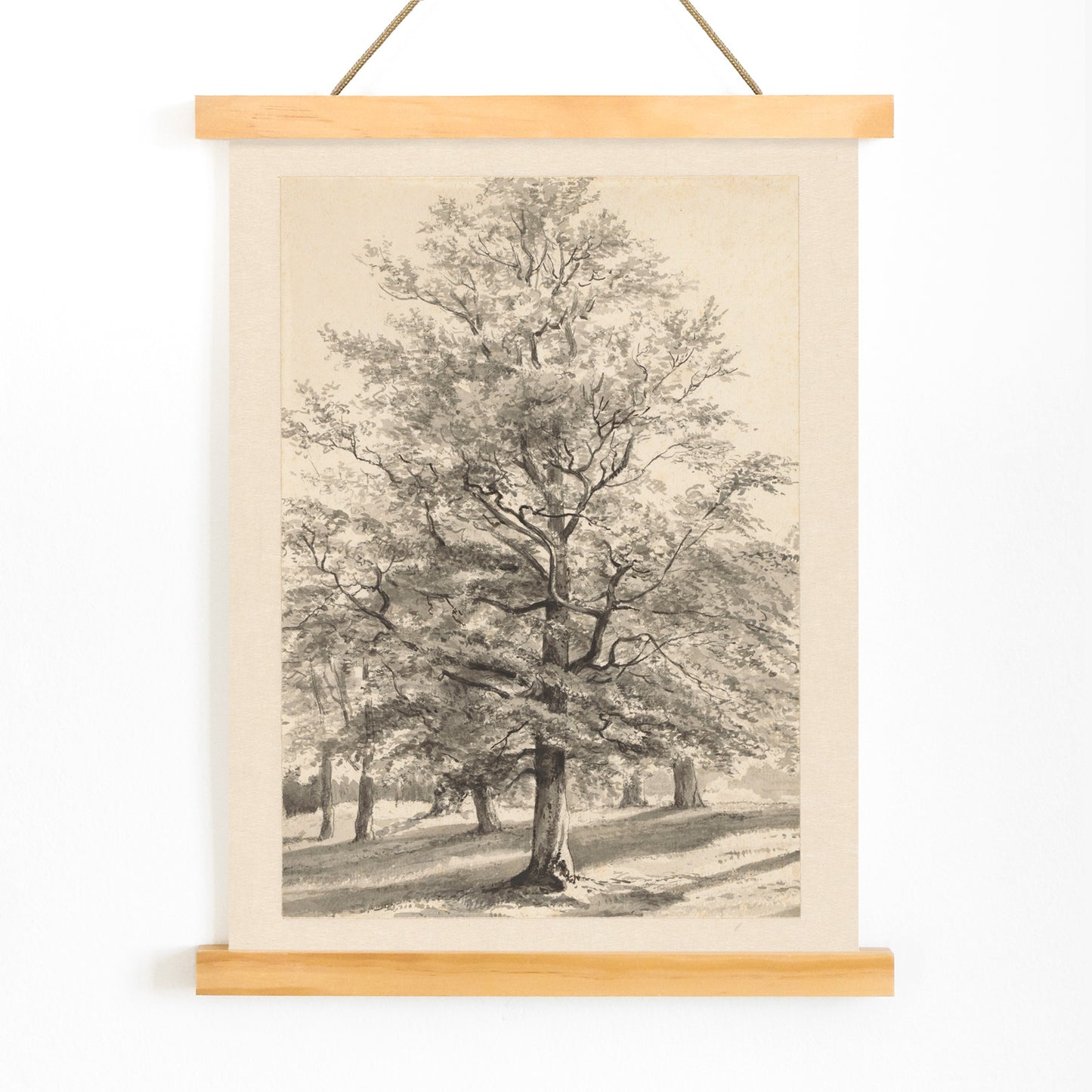
Created in 1825, Big Tree exemplifies the Romantic era’s fascination with nature’s grandeur and solitude. Rather than depicting a dramatic narrative, Steffelaar focused on the enduring presence of a single tree, inviting viewers to contemplate the passage of time and the resilience of the natural landscape. Such works were often intended to evoke reflection and a sense of place, rooted in the artist’s direct engagement with his environment.
This drawing would have served both as a study of form and as a meditation on the quiet power of the everyday countryside, resonating with those seeking solace in nature’s constancy.
Style & Characteristics
The composition centers on a towering tree with a broad, leafy canopy and a robust trunk, dominating the otherwise open landscape. Steffelaar’s fine, controlled linework and delicate shading create a soft interplay of light and shadow, lending the scene a gentle, atmospheric quality.
The restrained palette—mainly warm beige from the paper and subtle greys from the drawing medium—enhances the print’s serene and timeless mood. This understated approach is characteristic of early 19th-century landscape art and makes the piece a natural fit for those drawn to landscape wall art with a contemplative spirit.
In Interior Design
This art print brings a calming presence to living rooms, studies, or hallways, complementing both minimalist and traditional decor. Its neutral tones harmonize with natural materials like linen, oak, and stone, while its classic subject matter adds quiet sophistication.
Pair it with beige accents or soft grey textiles for a cohesive look, or include it in a gallery wall to balance more vibrant pieces and create a grounded, serene atmosphere.