


You may also like
-

The Dream Poster
Henri Rousseau · 1910 · Dreamlike jungle poster with reclining figure, moonlit foliage, and quietly watchful animals
Poster from 69 kr · Framed from 122,67 kr
-

Tour Eiffel 2 Poster
Unknown artist · 1925 · Striking black-and-white Eiffel Tower poster with crisp iron latticework and Paris skyline
Poster from 69 kr · Framed from 122,67 kr
-

View of the Eiffel Tower Poster
Leo Gestel · 1921 · Expressive black and white Eiffel Tower poster rendered with dynamic modernist lines
Poster from 69 kr · Framed from 122,67 kr
-

Low Tide Poster
August Allebé · 1870 · Quiet sailboat art print drawn in soft graphite tones with open coastal air
Poster from 69 kr · Framed from 122,67 kr


-

"Very nice Posters. The quality is amazing and we received it very quickly !"
-

"A shop to visit absolutely. Huge selection of posters. We spent more than an hour there !"
-

"Perfect to find gift. Price are very good. An they can frame and pack it on site"
About the Artist
Henri Rousseau, active in Paris around 1900, was a self-taught painter whose imaginative vision placed him among the leading figures of Naive art and Post-Impressionism. Known for his unique approach, Rousseau often drew inspiration from the rapidly changing cityscape of Paris and the spirit of modernity that defined the era. His works, though sometimes met with skepticism by academic circles, were embraced by avant-garde artists and collectors who admired his fresh perspective.
Rousseau's fascination with the landmarks of Paris reflected his desire to capture both the everyday and the extraordinary. By incorporating iconic structures like the Eiffel Tower into his art, he contributed to the growing appreciation of urban scenes as worthy subjects for fine art, helping to redefine the boundaries of artistic expression in the early twentieth century.
The Artwork
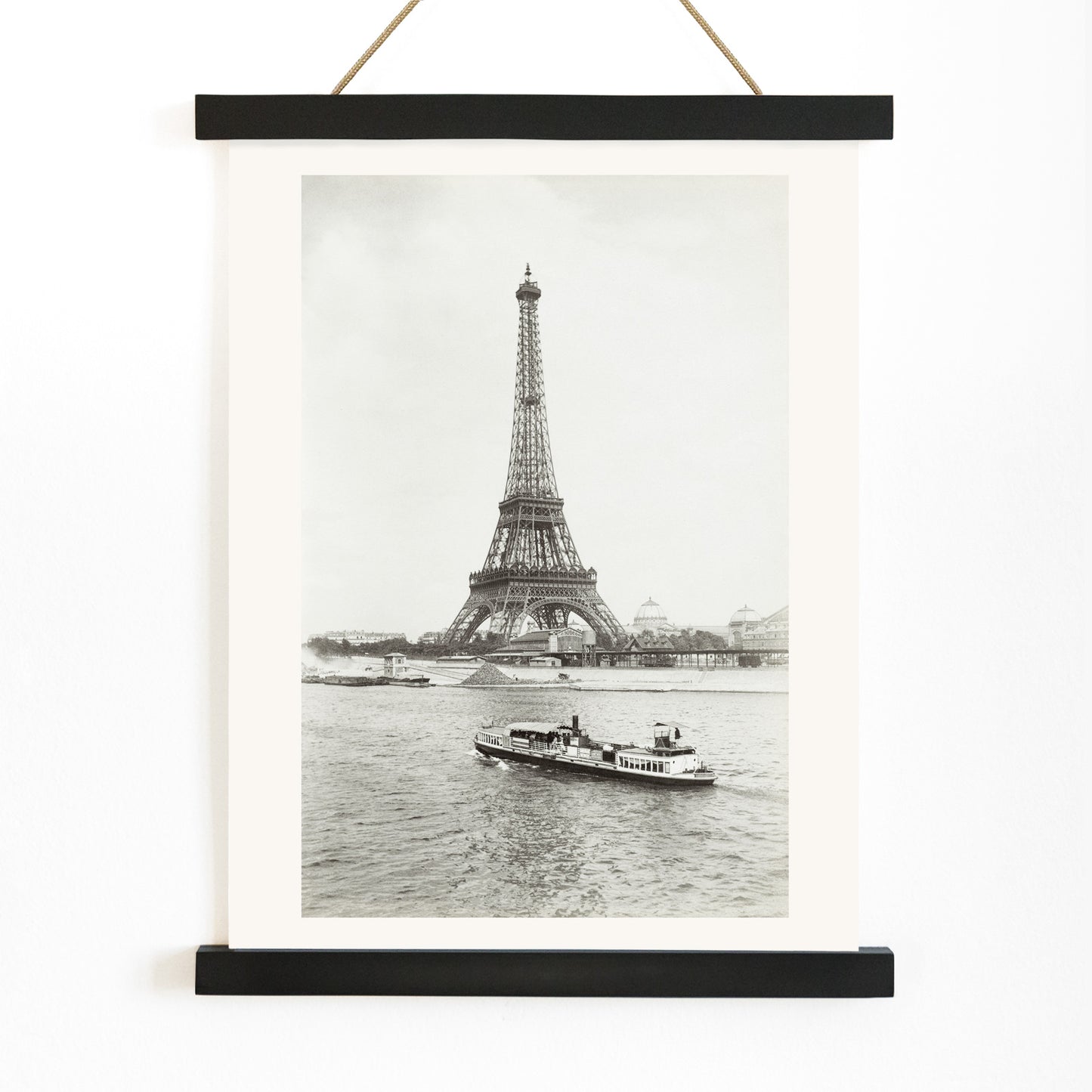
Painted at the dawn of the twentieth century, this depiction of the Eiffel Tower embodies the optimism and innovation that characterized Paris during the age of world fairs and technological progress. The Eiffel Tower, once a controversial addition to the city's skyline, had by 1900 become a celebrated emblem of French ingenuity and modern life.
This artwork reflects the era's fascination with engineering marvels and the transformation of Paris into a global destination. As such, it stands as a testament to the city's enduring allure and the role of art in commemorating cultural milestones, making it a fitting piece for those interested in classic art and landscape prints.
Style & Characteristics
The composition centers on the Eiffel Tower, rendered with simplified forms and a gentle, atmospheric palette dominated by soft greys and whites. The skyline is understated, allowing the tower to rise serenely above the city, while subtle tonal contrasts evoke a sense of calm and quiet reflection.
The style is marked by clarity and restraint, with minimal detail that enhances the dreamlike quality of the scene. This approach aligns the work more closely with vintage prints than with bold advertising posters, offering a sophisticated visual experience that complements contemporary and classic interiors alike.
In Interior Design
This Eiffel Tower art print brings a touch of Parisian elegance to living rooms, offices, or entryways, especially where a neutral color scheme is desired. Its subdued tones pair beautifully with natural materials such as wood, stone, and linen, and it harmonizes with both minimalist and traditional decor.
For a cohesive look, consider displaying it alongside other grey toned wall art or pieces from black and white posters. Framed simply, it serves as a refined focal point for those who appreciate landmark imagery and timeless design.