


You may also like
-

Three yellow lilies Poster
Maria de Gijselaar · 1909 · Elegant botanical print of three yellow lilies with graceful stems and warm red stamens
Poster from 69 kr · Framed from 122,67 kr
-

Orange bulbous lily Poster
Pierre-Joseph Redouté · 1805 · Luminous orange lily botanical print with poised stem, crisp leaves, and airy white ground
Poster from 69 kr · Framed from 122,67 kr
-

Lelies flowers Poster
Ohara Koson · 1927 · Serene botanical print of white lilies rising against a calm blue ground
Poster from 69 kr · Framed from 122,67 kr
-

Two lilies Poster
Anton Weiss · 2006 · Monochrome lily botanical print with two blossoms and elegant stems on warm beige
Poster from 69 kr · Framed from 122,67 kr


-

"Very nice Posters. The quality is amazing and we received it very quickly !"
-

"A shop to visit absolutely. Huge selection of posters. We spent more than an hour there !"
-

"Perfect to find gift. Price are very good. An they can frame and pack it on site"
About the Artist
Willem van Leen was a Dutch flower painter active during the late 18th and early 19th centuries, renowned for his refined approach to floral still life. At a time when botanical study was flourishing across Europe, van Leen’s work bridged the worlds of decorative art and scientific observation. His paintings were admired by collectors who valued both artistic beauty and natural accuracy, and his legacy endures among enthusiasts of classic art prints and botanical illustration.
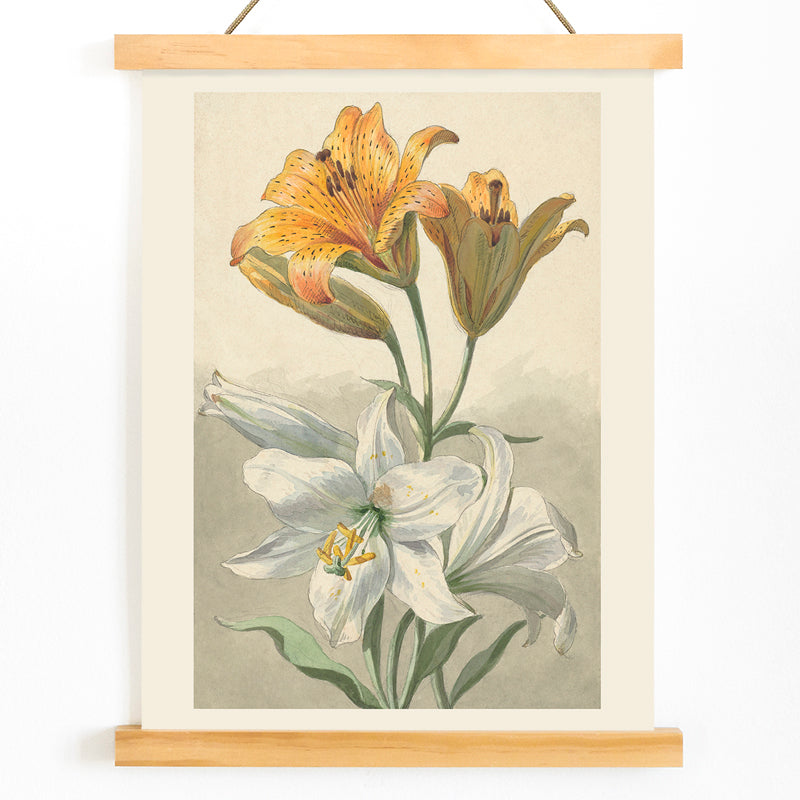
Yellow and White Lilies, painted in 1799, reflects van Leen’s ability to capture the quiet elegance of nature, offering a glimpse into the era’s fascination with both the science and symbolism of flowers.
The Artwork
Created at the height of the Enlightenment, this lily study embodies the period’s passion for cataloguing and understanding the natural world. Botanical illustrations like this served as both scientific records and objects of aesthetic appreciation, often collected in albums or used as inspiration for decorative arts. Lilies, in particular, held deep symbolic meaning—representing purity and renewal—making them a favored subject for artists and collectors alike.
This piece would have appealed to those who saw beauty and knowledge as intertwined, reflecting the era’s reverence for nature’s forms and meanings.
Style & Characteristics
The composition presents two lilies—one yellow, one white—carefully rendered with slender stems and elongated leaves. The artist’s precise linework and subtle shading emphasize the structure and delicacy of each bloom. The palette is soft and natural, with gentle yellows, creamy whites, and fresh green foliage set against an uncluttered background that draws focus to the flowers themselves.
The overall effect is serene and luminous, balancing scientific clarity with decorative grace, making it an exemplary botanical print. For more floral works, explore our botanical and yellow collections.
In Interior Design
This botanical print lends a sense of calm and refinement to bedrooms, kitchens, or hallways, where its gentle colors and elegant forms can soften the space. It pairs beautifully with light walls, natural woods, and linen textures, and integrates seamlessly into gallery walls featuring botanical art or classic prints.
To accentuate its palette, consider muted ceramics or warm neutral accessories. Its timeless style complements Scandinavian, traditional, or modern interiors, and layers well with other yellow-toned or floral artworks for a cohesive, sunlit display.