


You may also like
-
Yoshino Poster
Kamisaka Sekka · 1909 · Serene Japanese landscape poster with abstract green and blue hills on warm beige
Poster from 69 kr · Framed from 122,67 kr
Regular price From 46,00 krRegular price -
Tomoe no yuki Poster
Kamisaka Sekka · 1909 · Quiet snowfall art print balancing bold black curves with generous beige negative space
Poster from 69 kr · Framed from 122,67 kr
Regular price From 46,00 krRegular price -
Tsuru Poster
Kamisaka Sekka · 1910 · Elegant crane poster with stylized pine branches in classic Japanese Rinpa style
Poster from 69 kr · Framed from 122,67 kr
Regular price From 46,00 krRegular price -
Ryoson Poster
Kamisaka Sekka · 1909 · Serene seascape art print with stylized waves and a quiet coastal silhouette
Poster from 69 kr · Framed from 122,67 kr
Regular price From 46,00 krRegular price


-

"Very nice Posters. The quality is amazing and we received it very quickly !"
-

"A shop to visit absolutely. Huge selection of posters. We spent more than an hour there !"
-

"Perfect to find gift. Price are very good. An they can frame and pack it on site"
About the Artist
Kamisaka Sekka was a Kyoto-based designer and painter who played a pivotal role in reviving the Rimpa tradition during early 20th century Japan. Renowned for his ability to reinterpret classical Japanese motifs, Sekka bridged the worlds of traditional craft and emerging modern design. His work influenced both decorative arts and graphic design, leaving a lasting legacy that continues to inspire artists and collectors today.
For those interested in Japanese aesthetics, our Oriental art prints and curated famous artists collection offer further exploration.
The Artwork
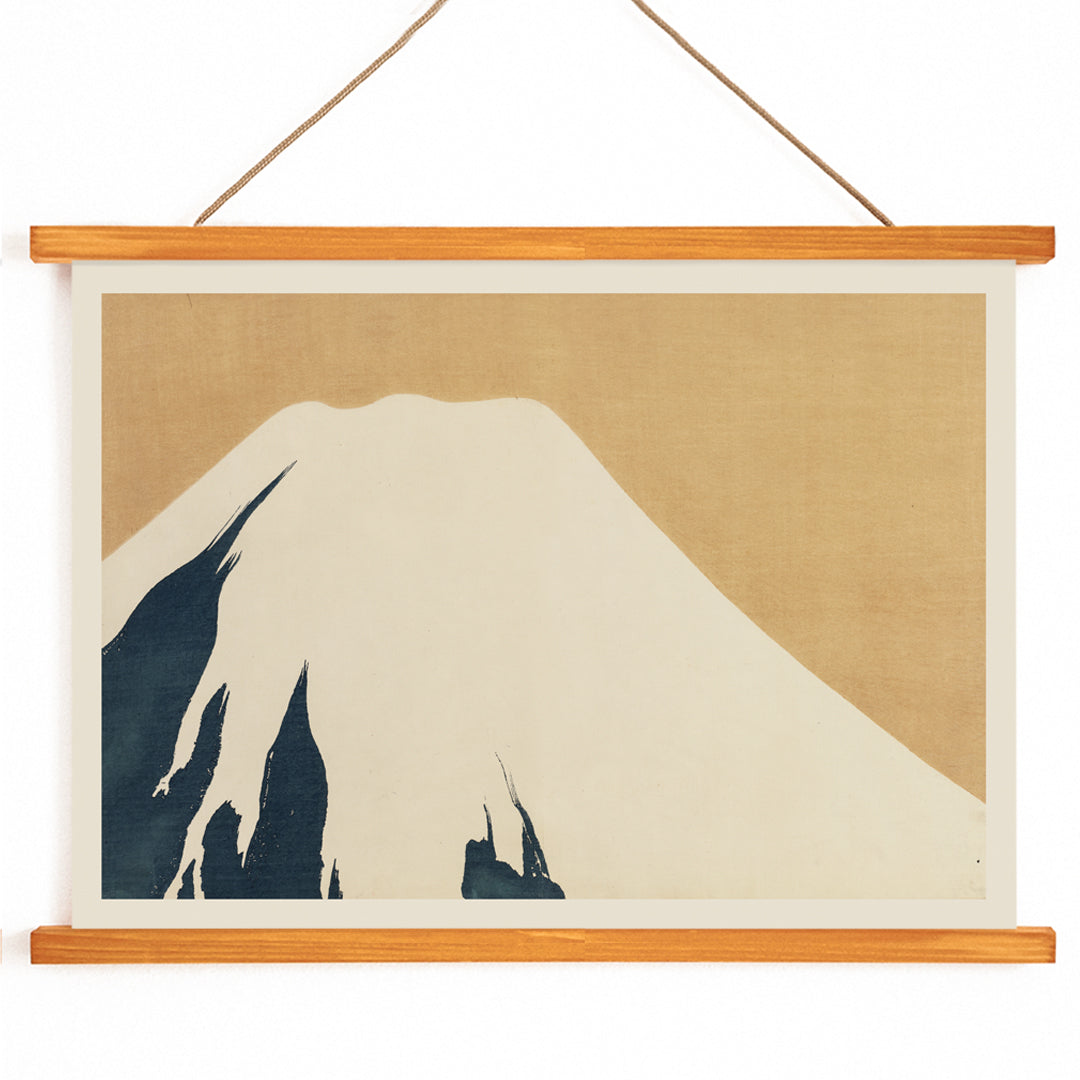
Mount Fuji has stood as a powerful symbol in Japanese culture, representing endurance, beauty, and spiritual significance. In the early 1900s, as Japan navigated a period of rapid modernization, artists like Sekka looked to Fuji as a reassuring emblem of national identity and continuity. This 1909 composition reflects Sekka's approach of distilling the mountain into a serene, almost abstract icon—an image that invites reflection rather than mere admiration.
The artwork was created during a time when Japanese artists were redefining their visual language, balancing reverence for tradition with a desire for innovation. Sekka’s interpretation of Mount Fuji exemplifies this synthesis, offering a contemplative vision that resonates with viewers across generations.
Style & Characteristics
The print is marked by its simplified forms, generous open spaces, and precise, clean contours that evoke a sense of modern minimalism. The palette is dominated by cool blues and luminous whites, with subtle yellow accents that add warmth and depth. This restrained use of color and uncluttered composition create an atmosphere of calm and spaciousness, allowing the iconic silhouette of Mount Fuji to take center stage.
Blending traditional Japanese aesthetics with a modern sensibility, this piece appeals to admirers of minimalist posters and tranquil landscape wall art.
In Interior Design
This Mount Fuji art print brings a sense of tranquility to living rooms, bedrooms, entryways, or quiet workspaces. It pairs beautifully with light woods, linen fabrics, and matte ceramics, making it an ideal choice for Japandi or Scandinavian-inspired interiors. The cool blue and white tones complement neutral walls and pale oak, while touches of yellow in accessories can echo the artwork’s subtle warmth for a harmonious effect.