


You may also like
-

Rainbow Pincushion cactus and Easter lily Poster
Unknown artist · 1899 · Detailed botanical print of cactus and lily contrasting spiny forms with soft white flowers
Poster from 69 kr · Framed from 122,67 kr
-

Beehive cactus Poster
Unknown artist · 1899 · Detailed beehive cactus botanical print with soft green tones and delicate red flowers
Poster from 69 kr · Framed from 122,67 kr
-

Assorted cacti Poster
Unknown artist · 1899 · Lively cactus botanical print with multiple forms and bright blossoms on clean paper
Poster from 69 kr · Framed from 122,67 kr
-

Rattail Cactus Poster
Unknown artist · 1899 · Elegant rattail cactus print with trailing green stems and red pink blossoms
Poster from 69 kr · Framed from 122,67 kr


-

"Very nice Posters. The quality is amazing and we received it very quickly !"
-

"A shop to visit absolutely. Huge selection of posters. We spent more than an hour there !"
-

"Perfect to find gift. Price are very good. An they can frame and pack it on site"
About the Artist
Created by an anonymous artist, this 1899 botanical plate is rooted in the late nineteenth-century tradition of scientific plant illustration. During this era, the fascination with exotic plants and the rise of botanical societies inspired artists to document rare species for study and exchange. Botanical illustrators worked closely with botanists and collectors, ensuring that each depiction served both educational and aesthetic purposes.
These anonymous creators were prized for their ability to translate living specimens into precise reference images, which were widely used in books, portfolios, and horticultural guides. Their legacy endures in vintage botanical art, which continues to bridge the worlds of science and visual culture.
The Artwork
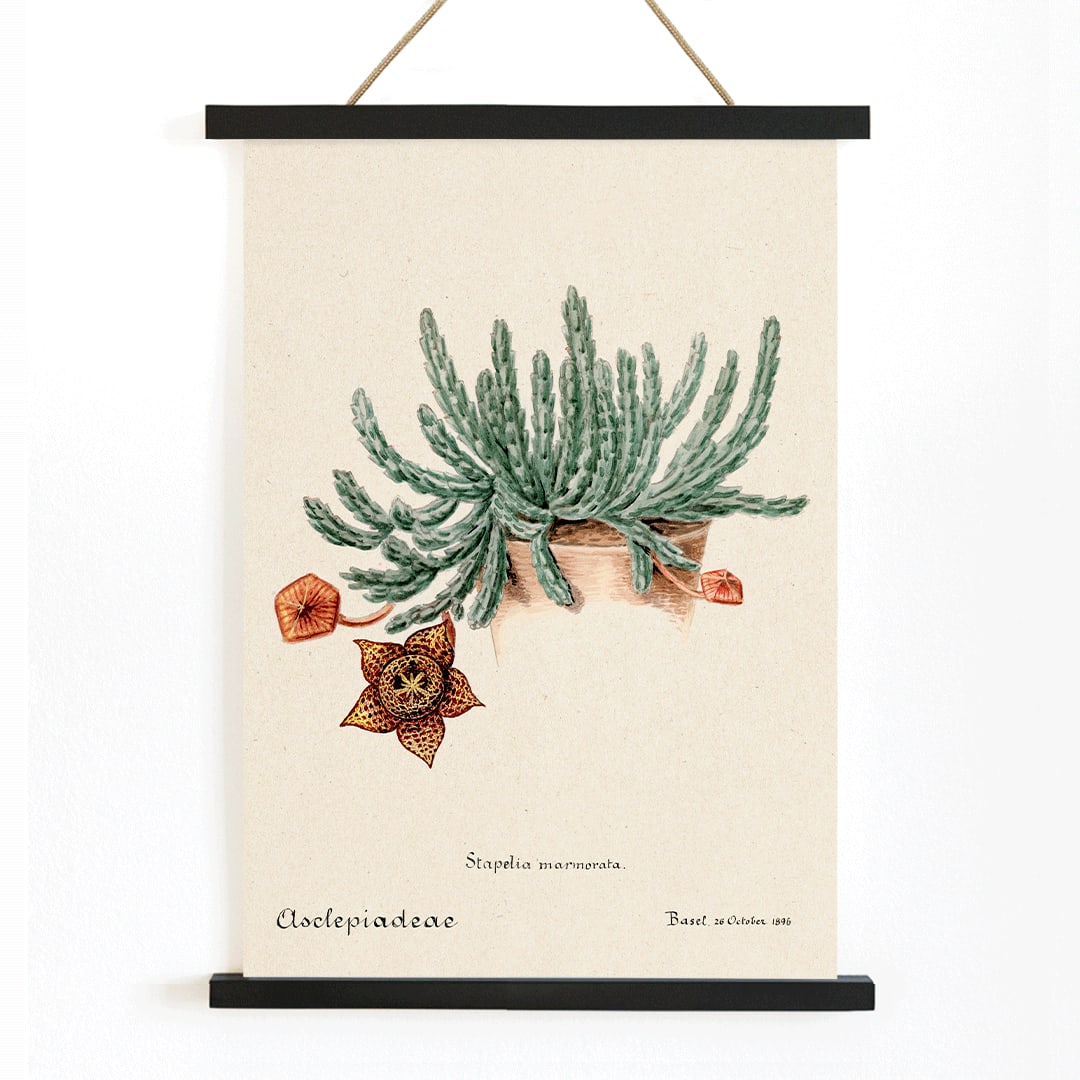
This plate features the starfish cactus, chosen for its striking, star-shaped bloom and unusual form. In 1899, such illustrations played a key role in helping gardeners and botanists identify and compare rare species, especially those seldom seen in flower. The artwork reflects a period when cataloging the natural world was central to scientific progress, and printed plates like this were essential tools for education and botanical exchange.
To explore more from this tradition, see our botanical wall art and discover additional science prints that celebrate the intersection of art and natural history.
Style & Characteristics
The composition isolates the starfish cactus against a neutral background, presenting the bloom as a specimen portrait. Delicate linework captures the succulent's structure, while subtle shading adds depth and clarity—hallmarks of classic botanical illustration. The flower is rendered in earthy reds and browns with speckled details, and the stem appears in soft green, all set against warm beige paper.
The overall effect is calm and contemplative, with the dramatic form of the bloom lending a touch of the unexpected. This botanical print balances scientific accuracy with decorative appeal, making it a distinctive addition to any art collection.
In Interior Design
This vintage botanical print is ideal for spaces seeking refined detail without visual clutter, such as a study, hallway, or reading nook. Its understated palette and singular subject make it especially suited to modern, Scandinavian, or eclectic interiors, where it can anchor a gallery wall or stand alone as a focal point.
Pair it with natural materials like wood and linen, or echo its tones with soft neutrals and plant greens for a harmonious look. For more inspiration, browse our green tone art prints or complement your selection with options from our frames collection.